How to Start an Online Business: The Honest Guide
 Hasan Aboul Hasan
Published 2026-10-26
This is the whole path I'd give a friend who wants to start online: find an idea in your own life, check that people want it, plan it, build it in public, sell it, and get through the quiet months. It's free, with no course at the end and no affiliate links. It's not fast and it's not passive. It takes about 2 hours a day, for months, and almost no money.
- Your idea in one line: I'm solving a real problem for specific people
- Real evidence that people want it, before you build for months
- One thing to sell, one main platform, and an email list
- Your first build-in-public post
- A 30-day plan, week by week, with a checklist that remembers your ticks
What you need first
- About 2 focused hours a day. Not 10.
- Your job. Keep it while you build.
- Free accounts: one email list tool and one platform to post on.
- Claude with web search is optional. It helps with the research in Steps 2 and 3.
No money, no audience, and no "expert" title needed.
Before You Start: Read This First
This guide is free. All of it. There is no course waiting at the end, no premium version, no coaching call, and no affiliate links anywhere on this page. When I mention a tool, it's because I use it or I've seen it work, not because I get paid when you click.
I'm saying this first because I know how you probably got here. You searched how to make money online and found a hundred people promising freedom in 30 days, a laptop on a beach, passive income while you sleep. And most of them were selling you a course on making money online, which, honestly, is the main way they make money online.
I'm tired of this. And I'll be honest with you from the first line: years ago, I sold courses on this topic too. I tried to be honest back then and teach only what I actually did. But I was still part of that world, and today I see it differently.
Why I'm writing this
For years, I've been getting the same messages. Emails, replies to my newsletter, YouTube comments, questions inside my courses. They all sound the same: I want to start online, but I don't know where to start. What's the idea? What's the flow? How does this actually work?
And then most of them quit. Not because they are lazy. Because nobody showed them the whole picture honestly, from the idea to the first sale, including the slow, boring, and hard parts.
This guide is my answer to all those messages.
Where I stand today
I've been in tech for more than 15 years, and building online since 2016. I've built products, courses, tools, a YouTube channel, newsletters, and websites in English and in Arabic. Some worked very well. Many didn't.
After all these years, after AI changed everything, and after what life taught me, I'm leaning toward minimalism. I don't believe the goal is more and more and more.
We've been pulled into a race: work more, earn more, buy more, need more. The people who designed that race are the ones winning it. Most make-money-online content doesn't get you out of it. It just moves you into a different lane of the same race, with a laptop.
So let me be clear about what this guide is not about. It's not about getting rich, making millions, or quitting everything next month. It's about something smaller and real: building something online that solves a real problem for real people, pays you fairly, and gives you more freedom, not a new cage.
I started from zero too
If you're thinking "easy for him, he already has an audience," let me tell you how it really started.
Back in 2016 and 2017, I built two websites, three Facebook pages, and a YouTube channel. All of them died. For one to two years, I created websites, wrote content, posted on Facebook, and even paid for ads to grow. The result? Crickets.
Then, in 2017, I published my first video on my new YouTube channel, along with a course on Udemy. That video brought exactly one sale. One. But it was the first real sign that this could work.
This is called experience. And here's the good news: you don't have to go through all of that today. Things have changed. With AI and the platforms we have now, it's way easier than it was for me back then.
The honest truth before we begin
- It's not fast. Think months, not weeks. Commit six months to one real problem for specific people, and that's usually where things start working.
- It's not passive, at least not at the start. It's real work. It gets easier, but it starts as work.
- Don't quit your job. You don't need 10 hours a day. You need 2. Yes, 2 hours a day of building, posting, and engaging is more than enough. Quit your job later, when things are stable.
- You will feel like nobody cares. Everyone feels it. We'll talk about it, because that's exactly where most people quit.
One more thing: it costs almost nothing to start. Email tools, publishing platforms, and selling platforms mostly have free plans or no monthly fee. "Free" usually means they take a cut of each sale instead, and I show you the real numbers in Step 5. You don't need to invest money to begin. You need time and consistency.
How this guide works
I'll walk you through the full path, step by step, the same way I'd explain it to a friend over coffee:
- Find your idea
- Validate it
- Plan it
- Build it, and build in public
- Sell it
- Survive the quiet months
And at the end, we'll talk about the most important question of all: how much is enough?
If you get stuck anywhere, ask under this guide (the "Ask a question" button at the end of the page) or in our free community. I'll do my best to point you in the right direction.
Step 1: Find Your Idea
The best idea is usually not out there. It's already inside your own life, and you're walking past it every day.
Over the years, I noticed a pattern in the people who contact me. Many of them try to build the same things everyone builds: a social media scheduler, a link shortener, another generic online tool. Then they struggle to market it, because the competition is huge and they have nothing that makes them different.
What they miss is usually one of two things: their own experience, or their own country and language.
Miss #1: Your own experience
The things you lived through feel ordinary to you. That's exactly why you don't see them. But for someone going through the same thing right now, your experience is exactly what they are searching for.
Let me give you a personal example.
Years ago, I was diagnosed with H. pylori, a stomach bacteria. The doctors prescribed a strong antibiotic treatment that was really hard on my body, with a lot of side effects. Back then I didn't think much about natural remedies, so I took it.
One or two years later, it came back. And I said to myself: I'm never taking that again. There must be another way.
So I researched. A lot. Really a lot. Then I started trying natural remedies, like certain types of honey, gum, cabbage, and others. I took them for about a month to 45 days, then I did the tests again. It was gone. And from that day until today, my gut is better than it was before, which matters even more to me now that I've also been diagnosed with IBS.
I'm not telling you this as medical advice, and I'm not saying doctors are wrong. What worked for me may not work for you, so talk to your doctor about your own situation.
I'm telling you this because of what it represents. That experience is a niche. Thousands of people are searching right now for exactly what I went through. I could write a guide about it, start a blog, make videos, build a small community around it, because I lived it, I researched it, and I know what it feels like.
You probably have something like this too. A few examples:
- You homeschool your kids, and you've figured out routines, resources, and mistakes to avoid.
- You learned a new language as an adult and found what actually works.
- You recovered from an injury, a burnout, or a bad habit.
- You moved to a new country and figured out the paperwork, the culture, the first job.
- You raised a child with a specific challenge, or cared for an aging parent.
- You fixed something in your life that you struggled with for years.
Ask yourself: what did I go through that someone else is going through right now?
Miss #2: Your country and your language
Many people around the world, from India, Pakistan, China, the Arab world, anywhere, jump straight into the English market. They compete with millions of native speakers and huge companies, in the most crowded space on the internet.
Meanwhile, their real advantage is sitting right there: their language, their culture, their country. Problems that English content will never solve properly, because it doesn't understand them.
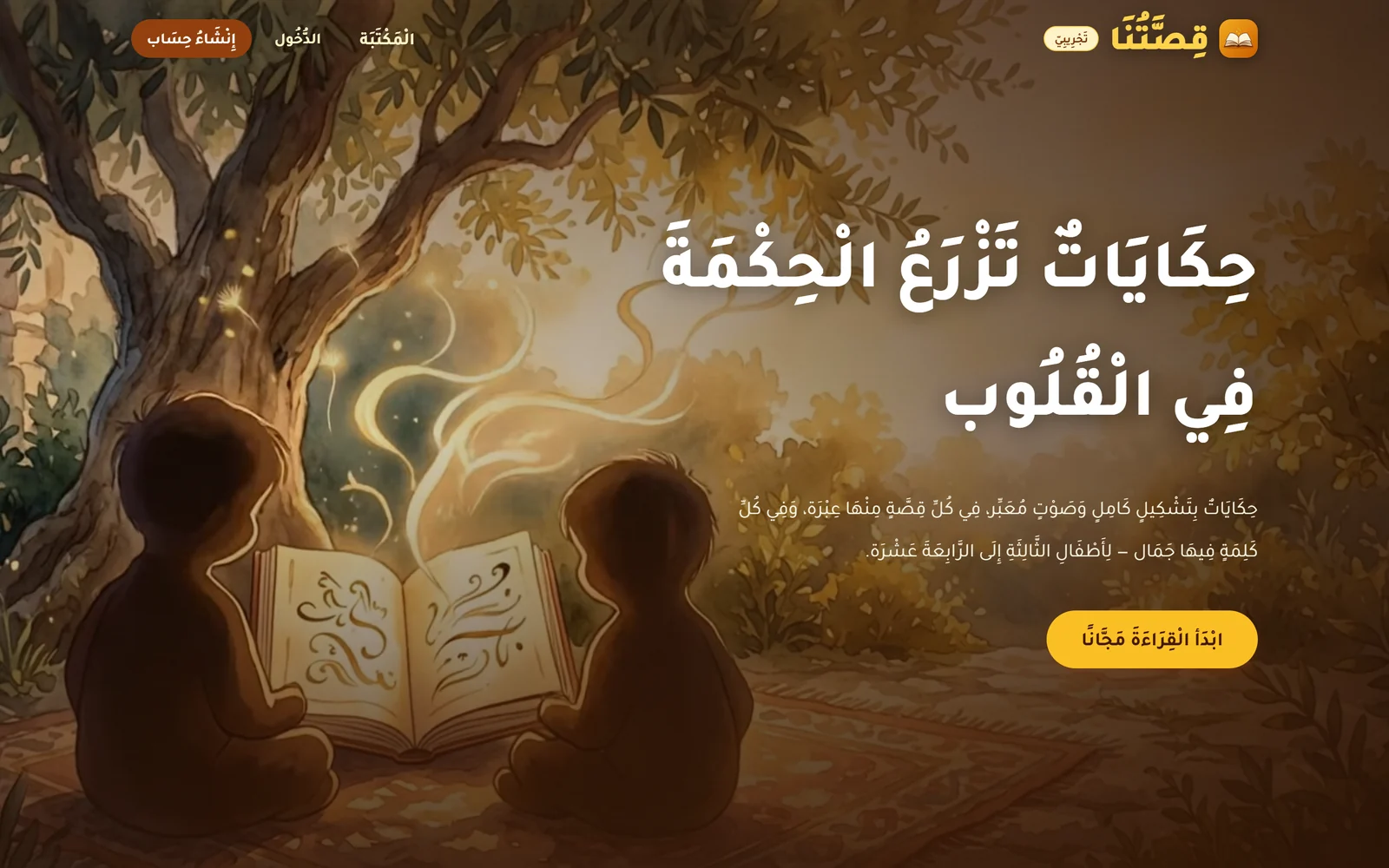
Here's my example. As a homeschooling dad, I was looking for good Arabic stories for my kids. Real stories, with specific morals, made for our culture and our values. Safe screen time that also helps them keep their Arabic. I couldn't find it anywhere on the internet.
So I built Qissatuna, a website of Arabic stories for kids. And I know many parents like me, in the Arab world, and Arab families in the US and Canada, who feel the exact same pain. No generic English platform can serve them the way something built in their language, for their culture, can.
Ask yourself: what does my country, my language, or my community need that nobody is building properly?
"But I don't have any experience worth sharing"
Some of you are thinking this right now. That's fine. You don't need to be an expert. You just need to be one step ahead of someone.
Pick something you want to learn anyway, a language, a skill, a tool, a health goal, and share your learning journey in public. What you tried, what worked, what didn't. People who are one step behind you will follow, because you remember exactly what it feels like to be a beginner. Experts often forget.
This is how many people start. You learn, you share, and over time, you become the person with the experience.
Painkillers vs. vitamins
Now that you have some ideas, here's the most important filter. I split ideas into two types.
Vitamin ideas are nice to have. They add value, they're extras. A fun game, a pretty app, a general lifestyle blog. People like them, but they don't really need them.
Painkiller ideas solve a real problem for specific people. People are actively looking for a solution, and they feel the pain every day. My H. pylori story is a painkiller. So is Qissatuna: parents worried about screen time and about their kids losing their Arabic.
Both types can work. But vitamins need much more marketing, better copy, more reframing, more convincing. Painkillers sell themselves much more easily, because the pain does half the work for you.
From my experience: when you pick a real pain for specific people and stay with it for six months, it usually works.
A quick test. Tick what's true for your idea:
Turning a vitamin into a painkiller
If your idea is a vitamin, don't throw it away. Most of the time, it just hasn't found its pain yet. Reframe it until it sits on top of a real problem for real people.
- A recipe blog is a vitamin. Quick 20-minute dinners for working parents with picky kids is a painkiller.
- A language learning app is a vitamin. Arabic for kids of Arab families abroad who are losing the language is a painkiller.
- A fitness channel is a vitamin. Back-friendly workouts for people who sit at a desk all day is a painkiller.
Same skills, same idea. Different person, different pain.
Write your idea in one line
Before moving on, fill in this sentence:
I'm solving [a real problem] for [specific people].
Type it here once. It also fills in the two Claude prompts in Steps 2 and 3, so you can copy them ready to use.
What you type stays in your browser only. Nothing leaves this page.
For example:
- I'm solving the lack of good Arabic moral stories for homeschooling Arab parents.
- I'm solving recurring stomach problems for people who want natural options.
If you can't fill it in clearly, your idea is not ready yet. Go back to your own experience and your own language.
Don't marry your idea yet
You now have an idea, maybe a few. Good. But don't fall in love with it yet. In the next step, we'll test whether real people actually want it.
And if you're still stuck and want more inspiration, my digital product ideas library is free for everyone, no sign-up needed. Use it to brainstorm, but always come back to the same question: what have I lived, and who needs it?
Step 2: Validate Your Idea
Validation means one thing: finding real evidence that real people want this, before you spend six months building it.
This is the step most beginners skip. They fall in love with the idea, build for months, launch, and hear nothing. Not because the idea was bad, but because they never checked if anyone was waiting for it.
If you have more than one idea
Most people don't have zero ideas. They have five, and they're frozen. That's normal. Here's how to pick one:
- Run each idea through the painkiller test from Step 1. Keep the ones that score highest.
- Ask where you have an edge. Did you live it? Is it in your language or culture? That's your unfair advantage.
- Ask if you can stay with it for six months. Could you talk about this topic a hundred times without getting bored? Interest fades. Real pain for real people keeps you going.
- Ask if you can reach these people. Do you know where they hang out online? Are you one of them?
Pick the one that wins. Write the others in a notes file and park them. They're not dead, they're waiting. Working on five ideas at once is the fastest way to finish none.
You are the niche
Here's something that will remove a lot of fear: even if hundreds of people are already in your niche, there's still room for you. Because you can be the unique angle.
Your story, your style, your experience, your way of explaining things. Nobody else has those. Two people can teach the exact same topic, and people will follow one and ignore the other, just because of how it feels.
This matters even more today. With AI, creating content is easy. Many people now generate endless generic posts, videos, and articles with a click. It all starts to look the same. What people will lean toward, more and more, is the human touch: a real person with real experience, sharing honestly. That's you.
So don't ask "is anyone else doing this?" Ask "how would I do this?"
Competitors are good news
When beginners find someone already doing their idea, they panic and quit. Don't. Competitors are good news, for two reasons.
First, they are proof of demand. If people are already building, writing, and selling in this space, it means there are people who want it. An idea with zero competitors is often an idea with zero demand.
Second, they are your free school. Study them, not to copy, but to learn:
- What type of content and products do they make?
- What gets the most engagement?
- What do people complain about in their comments and reviews?
- What are people asking for that nobody is answering well?
The complaints and unanswered questions are gold. That's usually where your angle is hiding.
Find real evidence
This is the core of validation. You're looking for signs that people are actively looking for a solution. Some places to look:
- Google search: start typing your problem and see what Google suggests. Those are real searches.
- YouTube: look at videos on the topic and read the comments. What are people asking?
- Reddit, Facebook groups, forums, Quora: are people asking about this problem again and again?
- Amazon reviews: read the reviews of books in your topic, especially the 2 and 3 star ones. They tell you what's missing.
Good signs: the same question asked many times, people describing their frustration in detail, people saying they tried things that didn't work, and people already paying for solutions.
A warning about false validation
Your friends and family saying "great idea!" is not validation. They love you, they want to be nice, and most of them are not your target audience.
The same goes for people saying "I would totally buy that." Saying is easy. The only validation that counts is real behavior: people searching, asking, engaging, signing up, and eventually paying.
Validate by giving value first
This is my favorite way to validate, and it fits everything this guide is about.
Instead of asking people "would you buy this?", give them something genuinely helpful for free and watch what happens. Write a useful post. Make a short video. Share a simple guide or a checklist about the problem.
Then watch the response:
- Do people reply, save, or share it?
- Do they ask follow-up questions?
- Do they say "do you have more on this?"
- Do they tell you their own story with the same problem?
If yes, you've found something. And notice what just happened: you didn't only validate your idea, you also started building your audience. The value you gave is already marketing.
If nobody responds, don't panic either. Try a different angle, a different format, or a different place before you give up on the idea. One post is a signal, not a verdict.
Let AI do the research with you
You don't have to do all this research by hand. Claude, with web search turned on, can do a lot of it with you. Here's a prompt you can copy and paste into a new chat. If you filled in your one line in Step 1, your idea is already in it:
I'm validating a business idea.

My idea in one line: I'm solving [problem] for [specific people].

Please search the web and help me answer:
1. Are people actively searching for or asking about this problem? Show me real examples (forums, Reddit, YouTube comments, Q&A sites) with links.
2. Who is already serving this audience? List 5-10 competitors, what they offer, and what they charge.
3. What do people complain about in existing solutions? Look at reviews and comments.
4. What questions keep coming up that nobody answers well?
5. Based on what you found, is this a painkiller or a vitamin? Be honest, and suggest how I could reframe it toward a real pain if needed.

Don't flatter me. If the evidence is weak, tell me.
Once you have one idea, some real evidence, and a sense of your own angle, you're ready to plan.
Step 3: Plan It
Planning comes down to three decisions: what you will sell, what free content will bring people to it, and how you will keep in touch with those people.
Decide your package
Before you create anything, decide the shape your idea will take. What is the actual thing people will pay for? The same idea can be packaged in many ways.
One honest note first: I'll only talk about digital products and online businesses here, because that's what I've actually done since 2016. I don't have real experience in e-commerce or physical products, so I won't pretend to teach them.
| Package | Good for | How it makes money |
|---|---|---|
| Ebook or book | Explaining a topic or an experience in depth | One-time sales |
| Online course | Teaching a skill step by step | One-time sales, sometimes bundles |
| Templates, guides, checklists | Saving people time on a specific task | Small one-time sales |
| Newsletter | Ongoing insights in a topic you love | Paid subscriptions, sponsors |
| YouTube channel | Teaching, stories, reviews | Ads, sponsors, and selling your own products |
| Membership or community | People who want ongoing support and connection | Monthly subscriptions |
| App, tool, or website | Solving a problem with software | Subscriptions, one-time purchases |
| Services or coaching | Helping people directly with your skill | Per project or per session |
Some examples using the ideas from Step 1:
- My H. pylori experience could become an ebook, a blog with a small paid guide, or a YouTube channel about gut health from personal experience.
- Qissatuna became a website with a library of Arabic stories. It's free while it's in beta, and paid access for parents comes later.
Start with one package. You can add more later. A beginner who launches a course, an app, and a community at the same time usually finishes none of them.
Plan your content around the product
Your product is what people pay for. Your free content is how they find you, trust you, and decide they want more.
The key word is around. Your content shouldn't be random. Every post, video, or article should be connected to the problem your product solves. If you're selling a guide on natural gut health, your content is about gut health, symptoms, food, recovery stories. Not your vacation, not the latest tech news.
Here's how to build a content plan:
- List your main topics. Three to five big themes around your problem. These are your content pillars.
- Collect real questions. Go back to everything you found in Step 2: the questions people ask, the complaints, the comments. Each one is a piece of content.
- Check what people search for. Use keyword research to see which questions have real search volume. You can use free tools like Google Keyword Planner (it needs a free Google Ads account, no ad spend), or ask Claude with web search to check which questions people search for most.
- Turn it into a calendar. Spread it over three to six months, with a pace you can actually keep. One good post a week you keep for six months beats daily posts you stop after two weeks.
Here's a prompt to help you brainstorm the plan with Claude. Fill in the two boxes and it's ready to copy, with your one line from Step 1 already inside:
What you type stays in your browser only. Nothing leaves this page.
Help me build a content plan.

My idea: I'm solving [problem] for [specific people].
My product: [what I will sell].
My main platform: [YouTube / blog / X / Substack / ...].
Time I have: about 2 hours a day.

Please:
1. Suggest 3-5 content pillars connected to my product.
2. Brainstorm 40 content ideas based on real questions and problems my audience has. Search the web for real questions people ask.
3. Mark which ideas naturally lead people toward my product.
4. Turn the best ideas into a 3-month calendar at a pace I can realistically keep.
Then check the most important ideas with keyword research, and adjust.
Build your email list from day one
If I could give you only one piece of advice in this whole guide, it would be this: build an email list.
From my own experience, and from almost every coach and creator I know who works online, email is the best channel to market and launch your products. For me, email was the best channel in terms of revenue. Not YouTube, not social media. Email.
Why? Think about who is on your list. These are people who chose to join. They know you. They read your content week after week. You've built a connection with them, and they value what you share. When you launch something, you're not shouting at strangers. You're telling people who already trust you.
And most importantly: you own it. Social media accounts can be banned, algorithms change overnight, platforms die. Your email list is yours. Nobody can take it away.
So from the very beginning, give people a reason to join:
- A free newsletter where you share what you learn about the topic every week.
- A free checklist, short guide, or template that solves a small part of the problem.
- Updates on what you're building, if you're building in public.
Where to host your list? I use Kit, which has a free plan for up to 10,000 subscribers. That's more than enough to start. You can also start for free on Substack, which lets you download your subscriber list any time. Pick one, set it up in an afternoon, and put the signup link everywhere you publish.
I'd skip Medium for this. Most of the people who follow you there can't come with you if you leave, and the whole point of a list is that you own it.
Your free content brings people in. Your email list keeps them close. Your product is there for those who want the deeper solution. That's the whole bridge.
Your plan is a direction, not a prison
One last warning. Planning can become another way to procrastinate. I've seen people spend months perfecting a content calendar and never publish anything.
Your plan is a direction. It will change once you start publishing and see what people respond to. That's normal and healthy. Make a rough plan, start publishing, and adjust as you go.
Step 4: Build It, and Build in Public
Build the smallest version of your product, and share the journey while you build it. Those two things happen together, not one after the other.
Building is easier than ever
How you build depends on what you chose in Step 3. A book is written, a course is recorded, an app is coded. But here's the good news: today, with AI, you can build things you couldn't even imagine before.
I've been programming for 15 years. And this year, I built things I never imagined I could build, especially in visuals, with the new AI models available today.
VidTSX Studio is one of them: a free desktop app that edits talking-head videos and turns a prompt into motion graphics, all rendered on your own machine. I built it for my own YouTube videos first.
AI can help you turn your thoughts into a book, a guide, a video, motion graphics, an app, almost anything. Things that used to take months can now take hours. You just need to know what you want, and learn what AI is capable of.
Two honest notes though:
- AI multiplies you, it doesn't replace you. Your experience, your ideas, and your voice are what make the product worth buying. Use AI to build faster, not to think for you.
- Start small. Build the smallest version that actually helps someone. A short guide before a full book. A simple tool before a full platform. You can always grow it later, based on what people ask for. I built PyRun to run my own Python scripts on a schedule. It started small, and it reached version 2.0 one release at a time.
If you have an idea in mind and you're not sure how to build it, ask under this guide or in the community. I'll try to point you in the right direction.
Why build in public
Building in public means sharing your journey while you build: what you're making, what you learned, what went wrong, what's next.
It solves the biggest problem beginners have. Most people build in silence for months, then launch to nobody. When you build in public, people follow the journey with you. By the time your product is ready, you already have people who care about it.
Some examples:
- Writing a book? Share it chapter by chapter, week by week, on Substack. That's exactly what I'm doing with my book Beyond Vibe Coding: Part I goes out free, one chapter per edition.
- Building an app or tool? Share screenshots, small wins, mistakes, and what you learned each week. I'm doing this right now with TinkerClick, a library of lessons you play instead of watch: a short video of every update on X and Substack, and the first lessons open to anyone while the rest is still being built.
- Creating a course? Share the lessons you're preparing as short posts or videos.
A word about Substack: it's a great platform today, because it's built around newsletters. Every reader who subscribes joins your email list. And it can become a standalone income source by itself through paid subscriptions.
What your first post can look like
Many beginners freeze at the first post. It doesn't need to be perfect or clever. It needs to be honest. Something like this:
I'm a homeschooling dad, and for months I couldn't find good Arabic stories for my kids. Stories with real morals, made for our culture, in proper Arabic.
So I've decided to build them myself. Starting today, I'll share what I'm building, what I learn, and the mistakes I make along the way.
If you're a parent with the same problem, follow along. And tell me: what's the hardest part of finding good content for your kids?
That's it. Who you are, the problem, what you're doing about it, and a question that invites people in. Your first post is not a launch. It's the beginning of a story.
Pick one platform and go all in
Choose one main platform, for example X or Substack, and give it your real focus. That means not only posting, but engaging: replying to people, commenting, connecting, being part of the conversation.
You can repost your content on other platforms too. That's fine, it takes a few minutes. But keep your real attention on one platform, maximum two, at the beginning. When beginners try to be everywhere, they burn out and grow nowhere.
Beware the social media bubble
This is an important warning, and almost nobody talks about it.
When you join a platform and follow people in your niche, the algorithm starts showing you more and more people doing exactly what you do. Soon it feels like everyone is building the same thing, everyone is in your niche, and the competition is impossible.
It's not true. The algorithm is picking a few hundred or a few thousand people out of billions and putting them all in front of you. It's a bubble. Outside it, most people have never heard of any of them, and they're still looking for help with their problem.
Don't fall into this trap. It will make you feel you can never make it, and it will demotivate you. Remember what you learned in Step 2: you are the niche.
Create a pattern that scales
One of the hardest parts of posting regularly is running out of ideas. The solution is to create a repeatable pattern: a content format you can produce again and again around your topic.
Here's my example. I created a series called Vibe Engineering Blocks, where each post explains one engineering concept for people who build with AI. I made the first 10 to 15 blocks myself, by hand. Once the pattern and the style were clear, Claude could help me scale it. Now I can create a full monthly content schedule in about 3 hours.
The order matters here. Make the first ones yourself. That's what gives the pattern your voice and your thinking. If you start by asking AI to generate everything, you'll end up with the same generic content everyone else is producing.
Your 2 hours a day
Remember, you don't need 10 hours a day. Two focused hours are enough. For example:
And always point people to your email list. With a growing list and consistent building in public, you'll be doing great.
Step 5: Sell It
Start selling in the simplest way possible, and move to your own setup later, once people are actually buying.
Many beginners get stuck here for weeks: which platform, which payment gateway, which website builder. Don't. You don't need a perfect setup to make your first sale. You need a link people can pay through.
Start simple, grow later
Where you sell depends on what you're selling. Here are some common options. No affiliate links here, just what I've seen work:
| What you sell | Simple place to start | Later, as you grow |
|---|---|---|
| Ebooks, guides, templates | Gumroad | Your own website with Stripe |
| Online courses | Marketplaces like Udemy, or Gumroad | Your own website or course platform |
| Community or membership | Skool | Your own website or platform |
| Newsletter | Substack paid subscriptions | Stays on Substack, or your own setup |
| Services or coaching | A Stripe payment link | Your own website with booking and payments |
| App or tool | Stripe payments inside your app | Same, with more plans and options |
Marketplaces like Udemy bring their own buyers, but they take a big share and control the price. Platforms like Gumroad and Skool are easy to start with and handle the payments for you. Your own website gives you the most control, but it's more work. For your first product, easy beats perfect.
- Gumroad: no monthly fee. It keeps 10% + $0.50 of each sale through your own link, and 30% when a buyer finds you through its Discover marketplace.
- Substack: free to publish. On paid subscriptions you keep 90%, minus card fees.
- Skool: no free plan. The cheapest plan is $9 a month plus 10% of each sale.
Card processing fees can come on top, so read the pricing page before you pick. These are the numbers on each platform's own pricing page in October 2026.
Launch to your email list
This is where the email list from Step 3 pays off. When your product is ready, your first announcement goes to your list, the people who followed your journey and already trust you.
Tell them the story: why you built it, what problem it solves, who it's for. Be honest about what it is and what it isn't. Then share it on your main platform too.
If you built in public, your launch won't feel like a cold sales pitch. It will feel like the next chapter of a story people were already following.
Your first sale
Asking for money for the first time feels strange for many people. It's normal. Remember: if you solved a real pain for real people, you are not tricking anyone. You're offering help to people who were looking for it.
Your first sale may be small. It might be one person. That one person matters a lot, because it proves something real: someone you don't know paid for something you made. From there, it's about doing more of what works.
Step 6: Survive the Quiet Months
When you start posting, you will hear crickets. This is the point where most people quit. Don't.
The crickets are normal
You publish your first posts, your first videos, your first newsletter. And nothing happens. A few views, maybe one like from a friend. It feels like nobody cares, like you're talking to an empty room.
Everyone goes through this. Me too. Every creator and builder you follow today went through it. The difference between them and the people who never made it is simple: they didn't stop.
This is exactly why I wrote this guide. So many people who contacted me over the years quit right here, a few weeks in, convinced it doesn't work. It does. It just takes longer than the gurus told you.
What to expect
These are not promises. They're what I've seen again and again, in my own work and in the people I've watched succeed.
Measure the right things
In the early months, don't measure money. Don't even focus too much on followers. Measure the small signs that you're on the right path:
- Someone replied with a real question.
- Someone shared their own story with the same problem.
- A few new people joined your email list this week.
- You showed up consistently, week after week.
These small signs come before the big ones. Every time.
But the most important thing to measure is you.
- Are you publishing?
- Are you consistent?
- Are you hitting your daily or weekly goals?
- Are you helping someone on this planet?
That's what you should care about, because it's the only part fully in your control. The views and the sales are not. This mindset shift alone can make a huge difference.
Tired or wrong?
There's a difference between being tired and being on the wrong path.
If you're tired, rest. Take a few days off. Then come back. Being tired is not a reason to quit, it's a reason to slow down. And remember, you only need 2 hours a day, and you kept your job, so there's no pressure that forces you to give up.
If you've been consistent for months and people still don't respond at all, don't quit either. Adjust. Try a different angle on the same problem, a different format, or a different platform. Go back to Step 2 and look for evidence again. Changing direction based on what you learned is not failure. It's exactly how this works.
The Whole Path, One Example
To see how everything connects, here is the full path applied to one idea: my Arabic stories project, Qissatuna. Steps 1 to 4 are how I'd run it if I started it today from zero. Steps 5 and 6 are where it really is right now.
Step 1: The idea. As a homeschooling dad, I couldn't find good Arabic stories for my kids. That's my own experience, in my own language. My one line: I'm solving the lack of good Arabic moral stories for Arab parents who want safe screen time and want their kids to keep their Arabic. It passes the painkiller test: parents are actively looking, and they feel the worry every day.
Step 2: Validate. I search Arabic parenting groups and the comments on Arabic kids' channels. I see parents asking for good content again and again, and complaining about content that doesn't match their values or isn't in proper Arabic. There are competitors, which tells me there's demand. Then I give value first: I share one free story a week and watch how parents respond.
Step 3: Plan. The package: a website with a library of stories, free while it's in beta, with paid access for parents later. The content: free stories, tips on healthy screen time, and ideas for keeping Arabic alive at home. The email list: parents who sign up and opt in get an email when a new story comes out.
Step 4: Build in public. I build the first small set of stories, using AI to help with illustrations and narration, while I write and review every moral myself. I share the journey on one platform where Arab parents already are, posting regularly and replying to every comment.
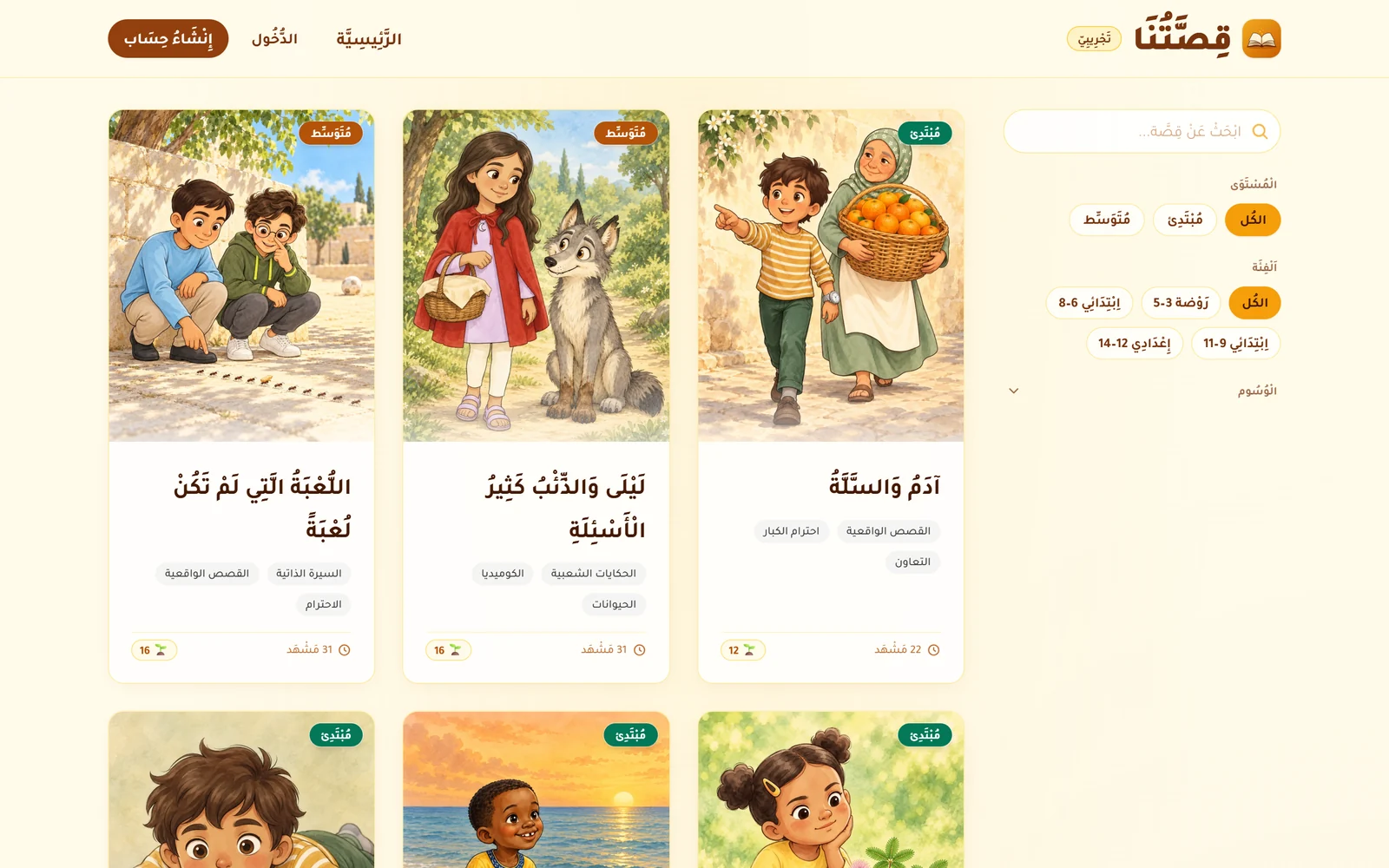
Step 5: Sell. This is where Qissatuna is today. It opened on 23 October 2026 as a free open beta: every story open to anyone, no payment. Parents can sign up, and the ones who opt in get an email when a new story comes out. That's the list. The paid membership is already built, and it's switched off. When parents show me it's worth paying for, I'll announce it to the list first, with one simple monthly plan.
Step 6: The quiet months. I'm in the first weeks right now, so this part is still ahead of me. The plan is the one from Step 6: keep posting, keep publishing a new story every week or so, keep replying. If what I've seen before holds, a small group of parents starts sharing and replying around month two or three, and month six is when I'll really know.
That's the whole thing. Not magic. One real problem, for specific people, done step by step.
Your First 30 Days
Here's exactly what to do, week by week. Tick each task as you go. Your ticks stay in this browser, so you can come back tomorrow and pick up where you left off.
Week 1: Find your idea
Week 2: Validate it
Week 3: Plan it
Week 4: Start building in public
After day 30, keep going. Build, publish, engage, 2 hours a day. And when it gets quiet, come back and read Step 6.
Final Words: Don't Chase Numbers
The goal was never to be rich. The goal is to do something you love, help real people, and be free.
Focus on value, not numbers
I know this is easier said than done. Followers, views, subscribers, revenue: the numbers are always there, and they're hard to ignore. But if you chase them, you'll lose your way.
Instead, focus on giving real value to people. Help them solve a problem. Make the world a little bit better, even if it's a small problem in your community, your language, your culture, your country, or even your neighborhood.
When you do that honestly and consistently, the numbers usually follow. And when they don't come as fast as you wanted, you still built something meaningful.
How much is enough?
Don't set a milestone to become rich or make millions. That's the same race we talked about at the beginning, just with a different finish line that keeps moving away.
Set a different target: work on something you love, and reach financial freedom. Enough to live well, take care of your family, and have time for what really matters. Not more and more forever.
And be careful not to tie your life to systems that will destroy you once you enter their loop: endless growth, endless spending, endless comparison. The whole point of building something of your own is to be freer, not to build yourself a new cage.
You can start today
You don't need to quit your job. You don't need money to invest. You don't need to know everything. You need an idea from your own life, some real evidence that people need it, and 2 hours a day.
Look at your own experience. Look at your language and your country. Find a real pain for specific people. Then start, and keep going when it gets quiet.
If you get stuck anywhere along the way, ask under this guide or in our free community. This guide is free, and so is the help.
Good luck.
FAQ
Do I need money to start an online business?
Almost none. Kit's free plan covers up to 10,000 email subscribers, and Substack and Gumroad charge no monthly fee. Free usually means they take a cut of each sale instead. What you really need is time: about 2 focused hours a day, for months.
How long does it take to make the first sale?
Think months, not weeks. In my experience, a small audience starts forming around month two or three, and around month six is usually where things start working, if you picked a real pain for specific people and stayed consistent. That is what I have seen, not a promise.
Should I quit my job to start?
No. Keep your job. Two focused hours a day of building, posting and engaging is enough. Quit later, when things are stable.
What if someone is already doing my idea?
That is good news. Competitors are proof that people want it, and their comments and reviews show you what is missing. Your story, your style and your experience are the angle nobody else has.
Which platform should I start on?
One main platform where your people already are, for example X or Substack, plus an email list from day one. You can repost on other platforms, but keep your real attention on one, two at most.
Related

Questions & Discussion
Ask a question about this guide →Have a question? Ask it in the community — it's tagged #guide and linked back here. Reading is open to everyone; posting needs a free account.
Loading questions…